How Much C-Wire Do I Need to Protect My Platoon?
The Tactical Leader’s Dilemma: Understanding the War Without Losing the Fight in Front of You
The first time I walked into a tactical operations center as a young officer, I was overwhelmed. All I wanted was a trip ticket to move my convoy.
Maps covered the walls. Radios were constantly transmitting. Senior leaders debated enemy courses of action, political considerations, logistics constraints, and future operations that stretched days and weeks into the future. Everyone seemed to understand something I didn’t.
I remember thinking:
"How am I supposed to lead Soldiers on the ground when I barely understand the war happening above me?"
It is a question many tactical leaders quietly wrestle with.
We join the military because we want to understand war. We read Clausewitz, Jomini, Liddell Hart, and modern theorists. We study Ukraine, the Pacific, AI, drones, logistics, and great power competition. We want to understand the battlefield.
But tomorrow morning, we still have a platoon to train.
We still have Soldiers who need counseling.
We still have equipment that needs maintenance.
We still have a range to execute.
And eventually, we still have to make a decision when rounds start impacting.
This creates a dilemma:
How much of the larger military problem should a tactical leader understand?
The answer is simple:
Understand the whole battlefield. Master your position on it.
The Myth of the Tactical Leader
One of the biggest mistakes aspiring military professionals make is believing that becoming a better thinker requires constantly operating above their level.
A platoon leader starts thinking about corps-level operations but neglects platoon readiness. A company commander becomes fascinated with division campaigns but struggles with training management. A field grade officer obsesses over strategic competition but cannot synchronize the staff processes required to execute tomorrow’s mission.
The problem is not intellectual curiosity. The problem is misplaced focus. Every level of war has a different responsibility. The art is knowing what belongs to you.
The Strategic Leader: Defining the Why
At the strategic level, leaders answer questions most tactical formations never directly see. Why are we fighting? What national objectives justify the use of military power? What alliances must be maintained?What resources can the nation commit?
A strategic leader must think beyond individual battles.
They must understand economics, diplomacy, industry, politics, and military power as interconnected systems. A general officer does not win a war by controlling every rifle squad movement. They win by creating the conditions where those rifle squads can succeed.
The General Officer: Designing the Campaign
Below the strategic level is the operational problem. General officers translate national objectives into campaigns.
They ask:
How do we connect battles together?
Where do we apply pressure?
How do we integrate joint capabilities?
How do we sequence operations over time and space?
A division commander does not personally manage every convoy route.
They establish the conditions where sustainment, fires, intelligence, and maneuver converge toward a common purpose.
Their battlefield is synchronization.
The Field Grade Officer: Making Complexity Executable
This is where many officers begin struggling. The field grade officer lives in the uncomfortable space between vision and execution.
They translate concepts into plans.
They synchronize resources.
They turn ambiguous guidance into executable operations.
They are responsible for answering:
"How do we make this happen?"
This requires understanding the larger battlefield because they connect tactical actions to operational effects. But their danger is getting lost in abstraction. A perfect concept that cannot be executed is just an idea.
The Company Grade Officer: Mastering the Fight in Front of You
The company grade officer has one of the most important responsibilities in the Army:
Turn training into combat power.
A company commander and platoon leader are not lesser thinkers because they are focused on tactical execution. They are the people who transform theory into reality.
Their questions are different:
Are my Soldiers trained?
Is my equipment ready?
Do my formations understand their mission?
Can we execute under stress?
A platoon leader does not need to design the entire campaign. But they should understand how their platoon contributes to it. A rifle squad assault may seem small, but operational success is built from thousands of small tactical actions executed correctly.
The NCO: The Guardian of Standards
The NCO corps is where military theory meets human reality.
NCOs answer questions officers often cannot:
Who is actually ready?
Who needs development?
What standard is slipping?
What problem is hiding beneath the spreadsheet?
NCOs build disciplined formations. They maintain the foundation upon which every higher-level concept depends. A strategy without disciplined execution is meaningless.
The C-Wire Problem
This brings us back to the original question:
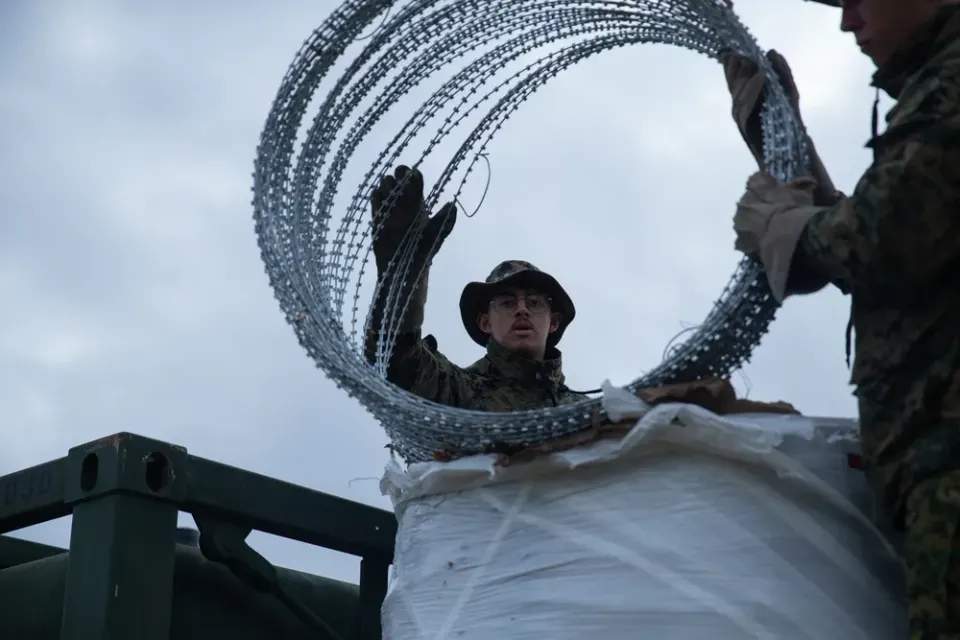
How much C-wire do I need to protect my platoon?
The answer is not “all of it.” You do not need to understand every wire obstacle across the battlefield. You need to understand enough to know why your obstacle matters. The same is true for military professionals. You need enough strategic understanding to know why your mission exists.
You need enough operational understanding to understand how your organization contributes. But you must master your assigned responsibility.
A platoon leader who spends all their time studying theater strategy but neglects training management is failing.
A general officer who ignores tactical realities is also failing.
The profession requires both.
Become a T-Shaped Leader
The best military professionals are “T-shaped.”
They have:
A wide understanding across the profession of arms.
They understand history, strategy, technology, logistics, and the changing character of warfare.
But they also have:
Deep expertise in their current responsibility.
They master their craft.
The platoon leader masters leading Soldiers. The company commander masters building combat power. The field grade officer masters synchronization. The general officer masters operational design. The strategic leader masters national power.
The mistake is believing you must choose between depth and breadth.
You need both.
Final Thoughts: Protect Your Position, Understand the Battlefield
The military profession does not need every leader thinking at every level simultaneously. It needs leaders who understand where they stand in the larger system.
The platoon leader who understands the division fight but executes the platoon mission flawlessly is valuable. The general officer who understands the tactical realities of the battlefield while designing campaigns is valuable.
The best leaders constantly ask:
"What is my responsibility? What do I need to understand? What do I need to master?"
You do not need to run the entire battlefield, but you should know where your piece fits.
Because ultimately, the question is not:
"How much of the battlefield do I control?"
The better question is:
"How well do I understand the battlefield I am responsible for?"
And that is where professional mastery begins.

Comments ()